Where advent calendars come from, and why they're not just for Christmas any more
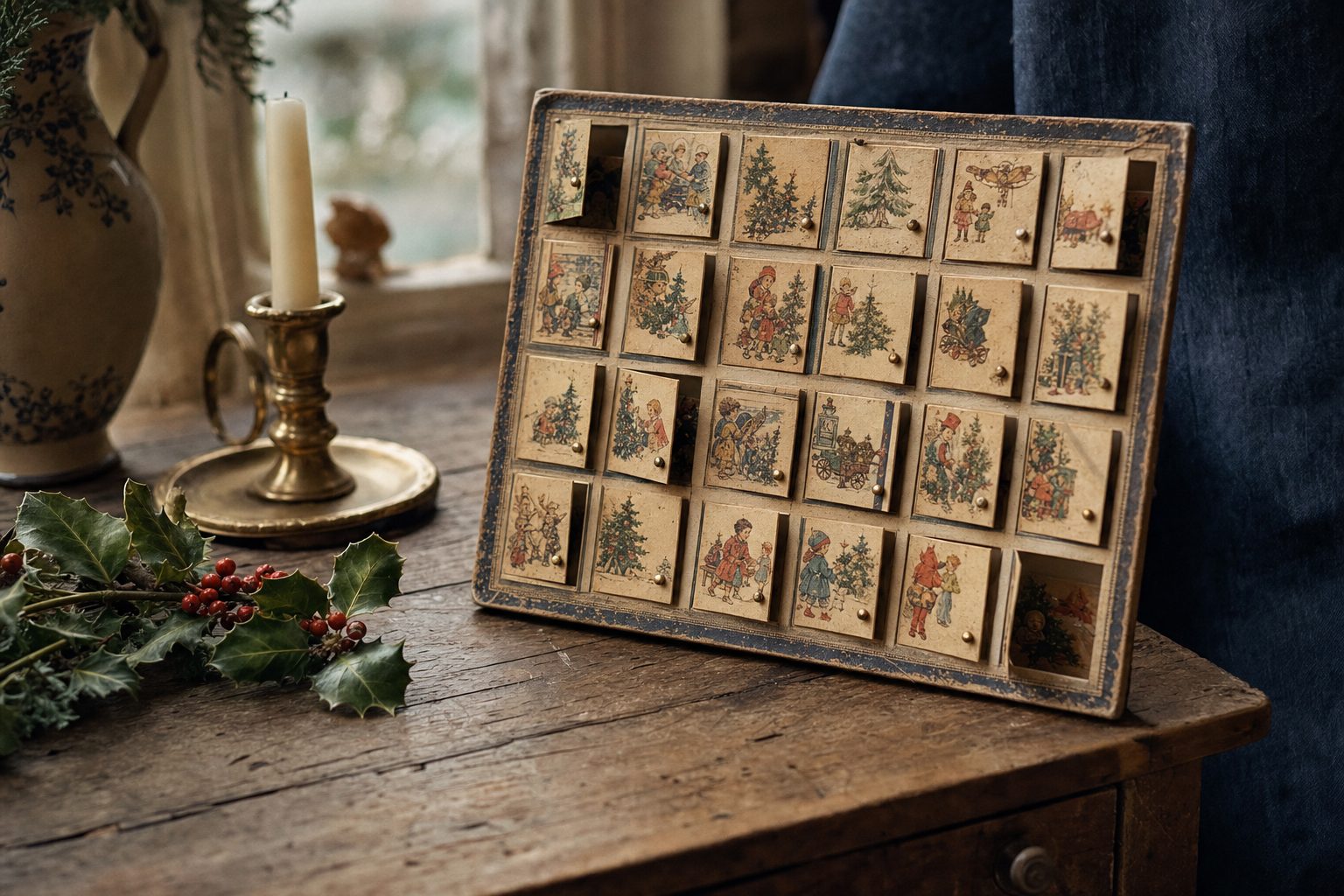
Every December, millions of people open a small cardboard door and eat a slightly waxy chocolate. Almost nobody knows why. The answer is a hundred and seventy years of parents trying to make children wait.
Chalk marks and candles (1850s)
The word advent comes from the Latin adventus, arrival, and for centuries it meant the four weeks of preparation before Christmas in the Western church. The counting-down part was a home invention. In German Lutheran households in the mid-1800s, families marked the days with a chalk line on the door, rubbing one out each morning, or lit one candle a day on an advent wreath. Some hung 24 small pictures on the wall. The point was the same as it is now: children asked how long, and this was a way to show them.
The first printed calendar (1908)
The one usually credited with the modern form is Gerhard Lang, a Munich printer, who as a boy had been given 24 sweets sewn onto a piece of card by his mother, one for each day. In 1908 his firm, Reichhold & Lang, printed the first commercial advent calendar: a sheet of 24 pictures to be cut out and pasted onto a backing board, one a day. Within a few years the pictures were behind little doors you could open, and the format hasn't fundamentally changed since.

Paper shortages, and the calendar goes abroad (1940s–50s)
Production stopped during the Second World War, when cardboard was rationed in Germany, and restarted almost immediately after. In 1946 Richard Sellmer began printing them in Stuttgart, and his company still makes them today. American troops took calendars home, and a photograph of President Eisenhower's grandchildren opening one in the early 1950s did the rest. By the end of that decade the advent calendar was a British and American habit as well as a German one.
Chocolate (1958)
The chocolate calendar is much younger than people assume. The first ones with a sweet behind each door appeared in 1958, and they didn't become the default until the 1970s, when supermarkets and confectionery brands worked out that a cheap calendar sold 24 impulse purchases at once. This is why the chocolate is never very good: it was never meant to be.
Beauty boxes, whisky, and the grown-up calendar (2010s)
Around 2010 the calendar was rediscovered as a format for adults. Cosmetics companies were first, putting 24 miniatures behind the doors and charging accordingly; then came gin, cheese, candles, tea, socks, and by the late 2010s a calendar for almost any hobby you could name. The interesting shift wasn't the products, it was the audience: the advent calendar stopped being something you gave a child and became something adults bought for themselves.
The homemade calendar comes back
At the same time, and partly in reaction, the homemade calendar returned: 24 envelopes on a string, a matchbox grid, a branch with paper cones, filled with notes and small things rather than bought miniatures. This is closer to Gerhard Lang's mother than to the beauty box, and it's why "advent calendar for boyfriend" and "advent calendar for mum" are things people now search for in October. The calendar has gone back to being something one person makes for another.
The version people make for each other now
The newest turn in the tradition is the personal one: not a calendar you buy for a season, but one a person builds for another person, for a date that matters to them. Tailii is a small app for exactly this. You choose the day, birthday, wedding, homecoming, the 25th, decide how many doors, and fill each with a note, a photo, a drawing, a voice message or a video. Each door stays locked until its morning. It's the chalk mark on the door, but the door is on their phone and what's behind it is you.
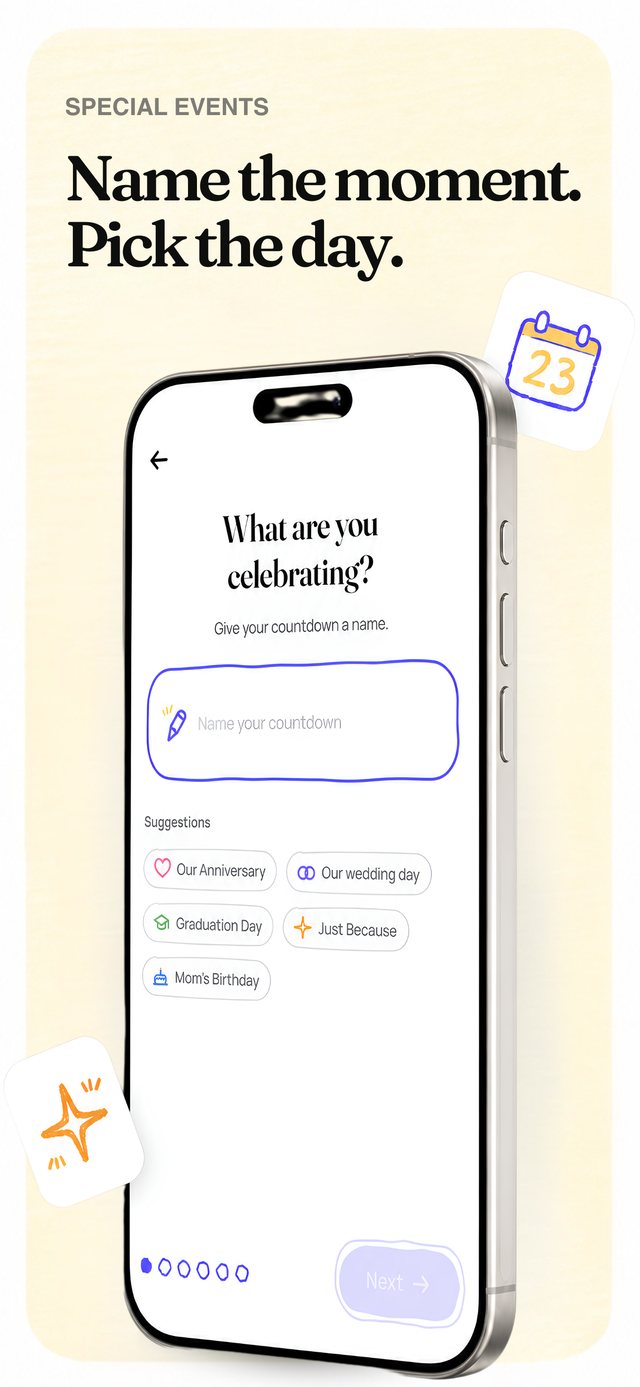
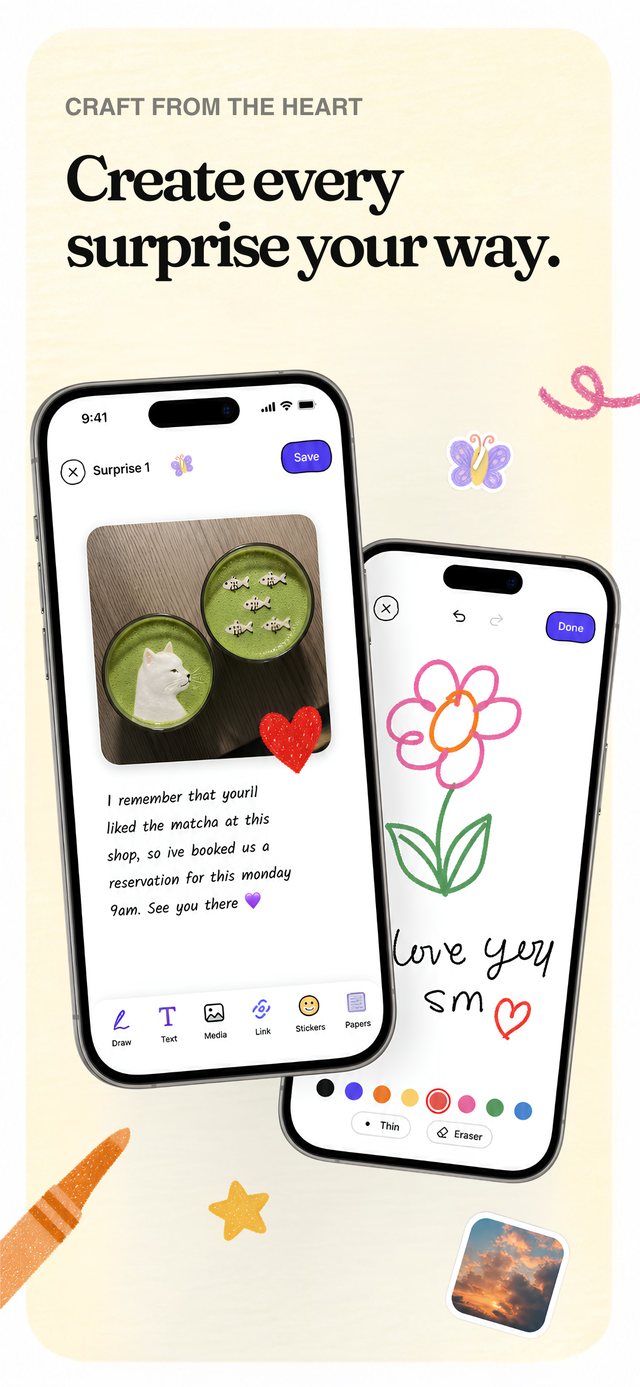
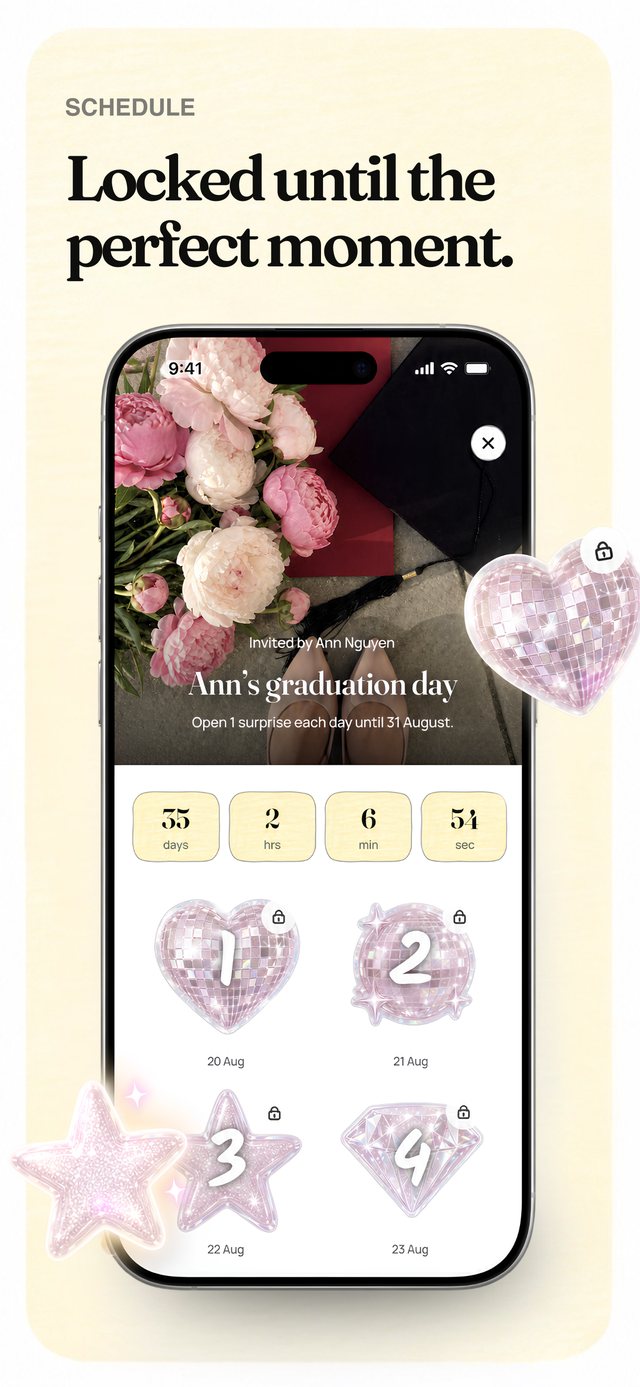
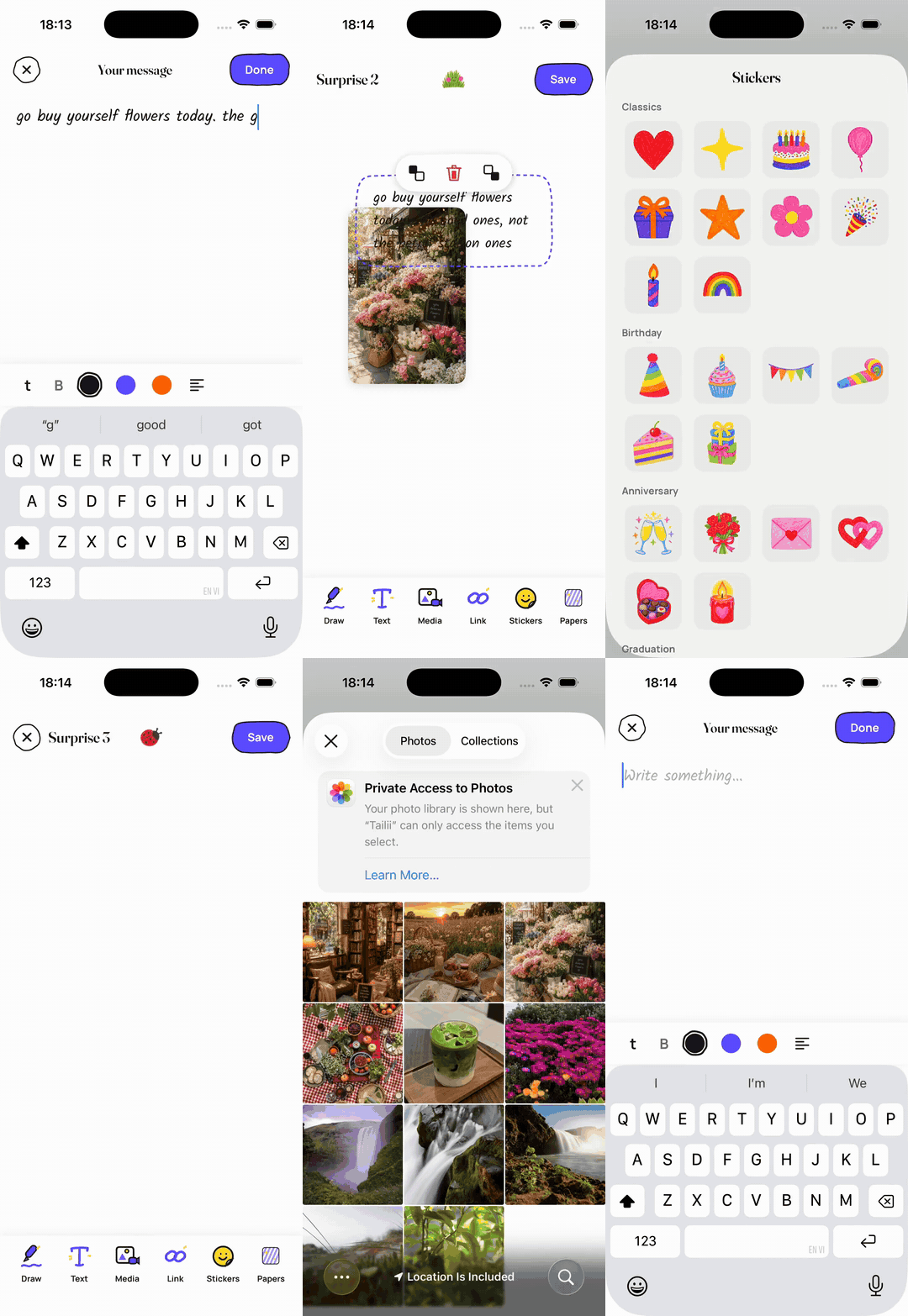
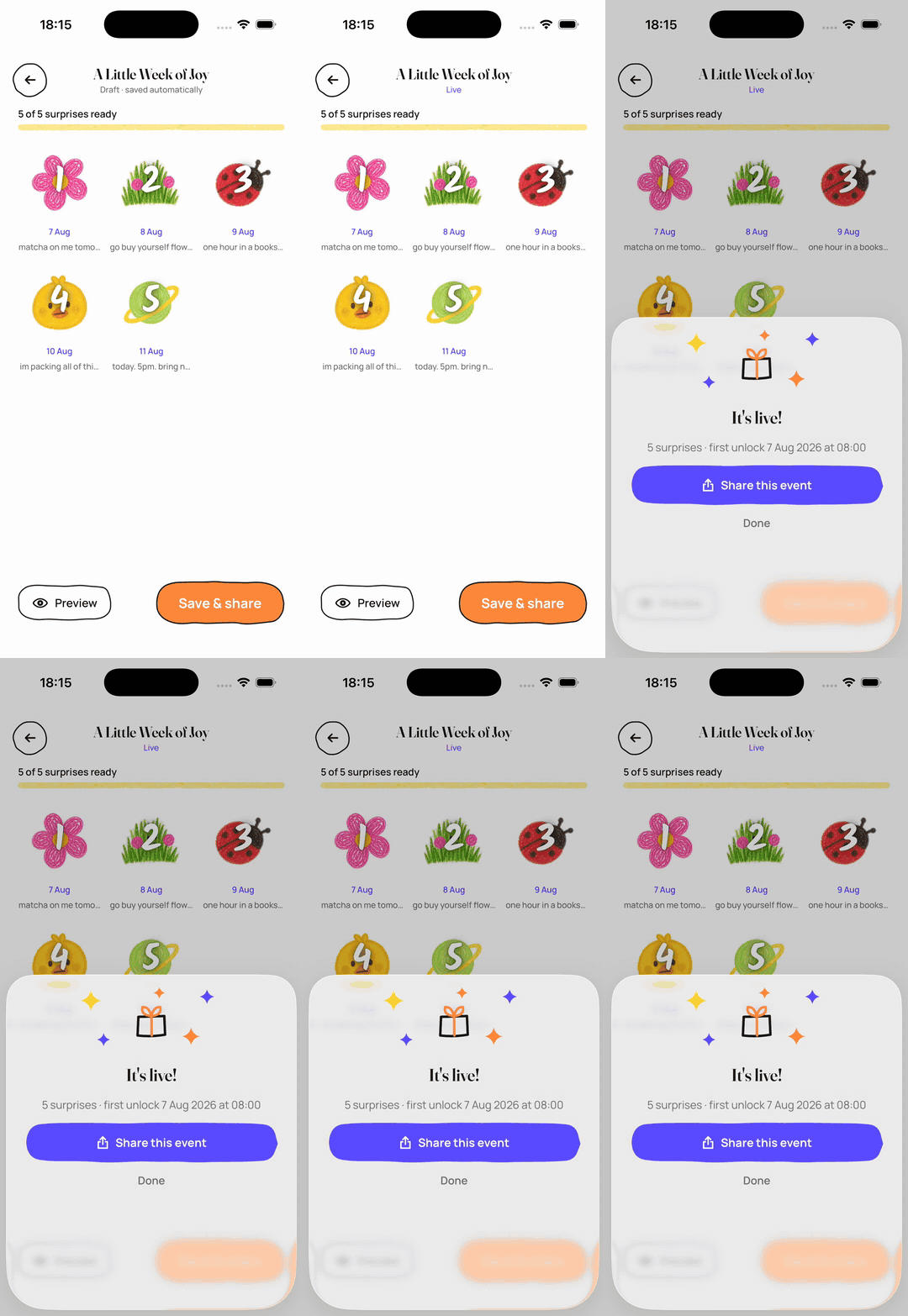
Here's one being made, in 40 seconds:
Any day can have an advent. Advent means arrival. The calendar was never really about December; it was about the wait before something you love. That can be a wedding, a birthday, a return flight.
Why it works, whatever's behind the door
A hundred and seventy years on, the mechanism hasn't changed: a fixed number of days, one small reveal each morning, and the rule that you can't open tomorrow's today. Psychologists have a name for the effect, anticipation, and the finding is consistent: people enjoy the wait for a good thing nearly as much as the thing itself, as long as the wait has a shape. Twenty-four doors give it a shape. That was true of chalk lines in 1850 and it's true of a locked door on a phone now.

Questions people ask
Who invented the advent calendar?
The tradition of counting the days grew up in German Lutheran homes in the 1800s, with chalk marks and candles. The first printed calendar is credited to Gerhard Lang of Munich in 1908; doors to open appeared a few years later.
When did chocolate advent calendars start?
1958. They didn't become the standard until the 1970s, when supermarkets and confectionery brands adopted the format.
Why are there 24 doors and not 25?
The calendar counts the days of December before Christmas Day, 1 to 24. Christmas Eve is the last door. Some modern calendars add a 25th, but the tradition ends on the 24th.
Can an advent calendar be for something other than Christmas?
Yes. Advent means arrival, so any date you're waiting for works: a birthday, a wedding, a homecoming. Tailii lets you build a countdown of daily surprises to any date.
Make one for a day that isn't Christmas
Free to download. Your first countdown is on us.
Download on theApp Store